Limescale spots on vehicle surfaces are most safely removed using a specially formulated water spot or mineral deposit remover that chemically dissolves the mineral residues without mechanically damaging paint, matte paint, or paint protection film. Gentle cleaning in the shade, short dwell times, and a soft microfiber towel are essential. For heavily etched spots, a light polish may additionally be required – but only on glossy paint or suitable PPF, never on matte paint.
What are limescale spots on car paint?
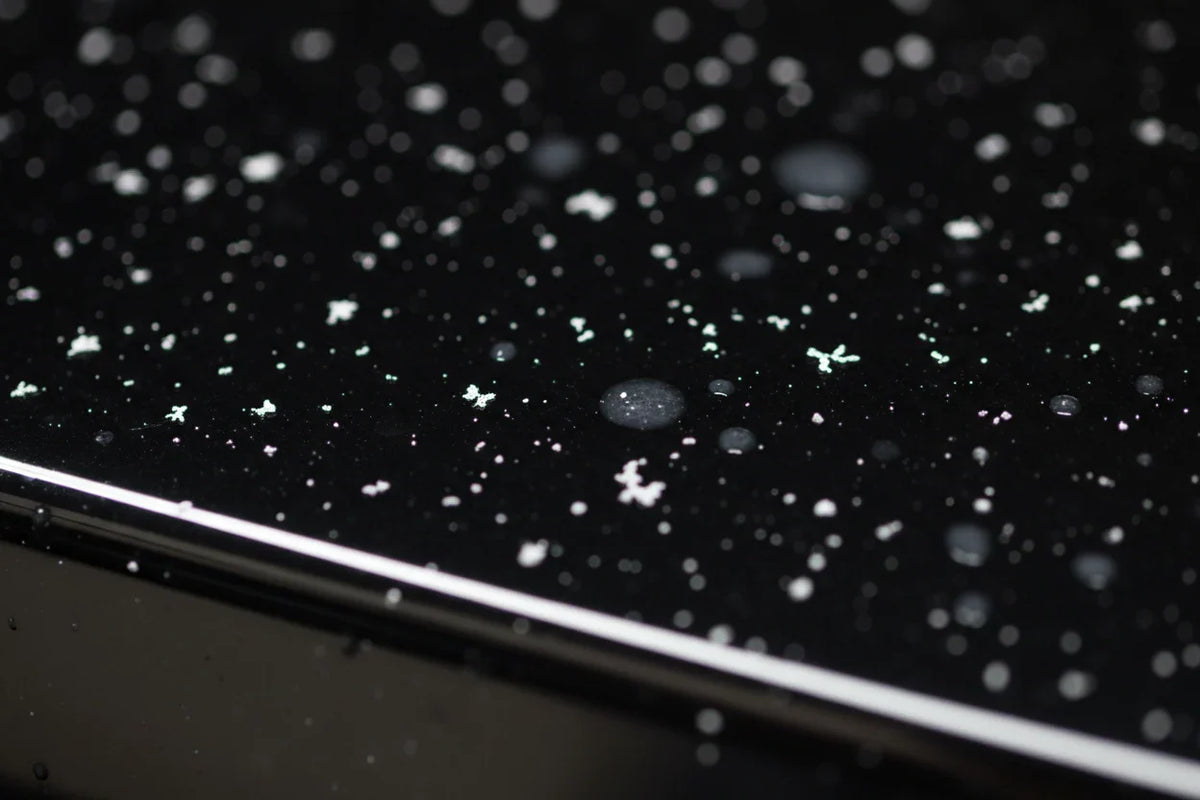
Limescale spots are mineral residues left behind by evaporated water. They occur when mineral-rich water – especially water containing calcium and magnesium salts – dries on the vehicle surface, leaving the dissolved minerals as visible deposits. In regions with hard water, these spots appear particularly quickly.
Why limescale spots form and why they are difficult to remove
Tap water or wash water contains dissolved minerals. When the water evaporates on the vehicle surface, these minerals remain behind and form visible spots or light rings. This effect becomes stronger when water dries in direct sunlight or evaporates on warm paint.
The difficulty is that these residues cannot simply be wiped away. Minerals adhere strongly to the surface and may even slightly etch into paint or film when exposed to heat. Mechanical rubbing usually only spreads the deposits – or causes micro-scratches.
This is why water spot removers work chemically: mildly acidic ingredients dissolve the mineral deposits so they can then be removed gently.
When each solution makes sense
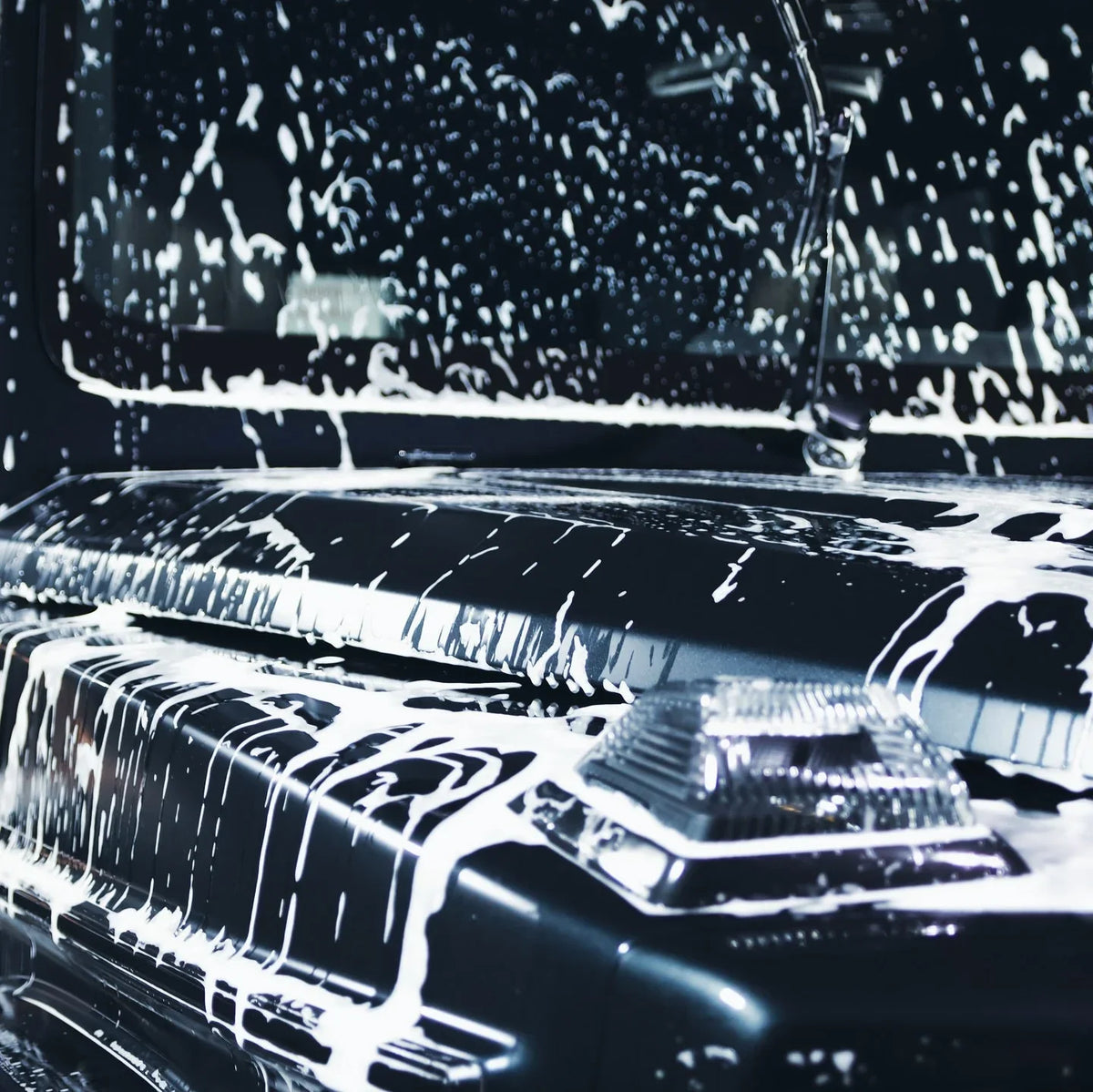
- If the spots are fresh: A thorough vehicle wash with a pH-neutral shampoo is often sufficient.
- If the spots remain visible: A dedicated water spot remover dissolves the mineral deposits.
- If the spots are already etched: A light polish may help on glossy paint or PPF.
- If the vehicle has matte paint: Use only chemical cleaners – polishing destroys the matte structure.
- If limescale is on PPF: A water spot remover or warm soaking usually dissolves the deposits safely.
Step by step: removing limescale spots safely
1. Preparation
- Treat the vehicle in the shade and on cool paint.
- Wash the surface thoroughly first to remove dust and dirt.
- Prepare clean, soft microfiber towels.
2. Application
- Apply a water spot remover or mildly acidic cleaner to the affected area.
- Allow it to dwell briefly – usually 30 to 60 seconds is enough.
- Gently wipe with a soft microfiber towel.
- Repeat if necessary.
For stubborn spots, placing a warm, wet towel on the area for a short time can help soften the mineral deposits.
3. Aftercare and protection
- Rinse the area with clean water.
- Dry the vehicle completely.
- Then apply a wax or sealant layer to make future deposits more difficult.
On paint protection film, a suitable sealant can further help reduce mineral adhesion.
Common mistakes and myths
-
“Limescale spots can simply be polished away”
This is only partly true. Polishing works on glossy paint or suitable PPF – but never on matte paint. -
“Vinegar or household cleaners are a good solution”
Such products can attack seals, films, or protective layers. Dedicated water spot removers are formulated in a controlled way. -
“Strong rubbing helps”
Mechanical force does not remove minerals – it only increases the risk of micro-scratches.
Professional tip from practice
Most limescale spots do not result from incorrect washing, but from improper drying. Never allow water to evaporate on paint or film in direct sunlight. Always dry the vehicle completely after washing using high-quality microfiber towels. This prevents mineral deposits from forming in the first place.
Frequently asked questions
Can you simply wash limescale spots off car paint?
Fresh water spots often disappear during a thorough wash. Dried mineral deposits usually require a dedicated water spot remover or polish.
Can limescale spots be removed from PPF?
Yes. Paint protection film tolerates water spot removers and often also light polishing if the film manufacturer allows it.
Can matte paint be polished?
No. Polishing destroys the matte finish. Limescale spots must always be removed chemically from matte paint.
Why do limescale spots appear after washing a car?
If mineral-rich water dries on the paint, the dissolved minerals remain behind as visible residues.
How can limescale spots be prevented permanently?
By drying the vehicle completely, washing in the shade, and applying a protective wax or sealant layer.
Conclusion
Limescale spots are caused by mineral-rich water that evaporates on the surface. Safe removal usually works chemically rather than mechanically. Cleaning vehicle surfaces in the shade, preventing water from drying on the surface, and regularly protecting the paint will prevent most water spots from forming in the first place.
Further tips on caring for paint protection film can also be found in our guide to cleaning and maintaining PPF.